What Is Osmosis and How Do You Treat It?
Osmosis can quietly damage a fibreglass hull for years before blisters appear. What causes it, how it’s diagnosed, and what a proper treatment involves.
Osmosis is one of the most talked-about – and most misunderstood – problems for owners of fibreglass boats. The word alone can put buyers off a boat. In reality, osmosis is a slow process that can be diagnosed properly and, when needed, treated so it doesn’t come back. This guide explains what it is, how it starts, how to tell whether your hull has it, and what treatment involves.
What Osmosis Actually Is
A fibreglass (GRP) hull is made of layers of glass fibre and resin, with a gelcoat on the outside. Gelcoat looks waterproof, but it isn’t completely watertight. Over years in the water, tiny amounts of water pass through it into the laminate behind.
Once inside, that water reacts with soluble materials left in the laminate from when the boat was built. This forms a fluid that draws in more water, building up pressure in small pockets. Those pockets push the gelcoat outwards, and that’s what causes the blisters most people notice first.
What Causes It
Several things make osmosis more likely:
- Time afloat. Boats that stay in the water year after year, with little time ashore to dry out, are more at risk. This is common in Malta, where many boats are used for most of the year.
- Warm water. Water temperature speeds up the process.
- How the hull was built. Small voids, air pockets, or resin that didn’t fully cure during building give water somewhere to collect.
- Gelcoat damage. Chips, cracks, and heavy sanding that thins the gelcoat all give water an easier way in.
Osmosis is often associated with older boats, but age alone isn’t the cause. A well-built older hull can be perfectly dry, while a newer one can show early signs.
How to Spot It
The classic sign is a scattering of small, raised blisters below the waterline, from pinhead size up to a coin or larger. When one is punctured, it often releases a liquid with a sharp, vinegary smell.
Other clues include:
- blisters appearing again in the same areas after antifouling
- a rash of tiny bumps visible when the hull is wet and the light catches it
- a hull that stays damp-looking once the rest has dried
Not every blister is osmosis, though. Blisters can also form between layers of antifouling or primer, which is a paint problem rather than a hull problem. Telling the two apart is the first job of a proper inspection.
How Osmosis Is Diagnosed
A proper diagnosis happens with the boat out of the water:
- Visual inspection once the hull has been washed and has started to dry.
- Moisture readings across the hull with a moisture meter, compared with readings above the waterline. This shows how much water is in the laminate, and where.
- Opening a few blisters to see how deep they go – in the paint, the gelcoat, or the laminate itself.
Readings are only meaningful after the hull has had time to dry on the surface, so a check straight after a haul-out and pressure wash can be misleading.
How Osmosis Treatment Works
Not every case needs a full treatment. Where blistering is minor and moisture readings are acceptable, local repairs and a protective barrier coat may be enough. Where the laminate is wet and blistering is widespread, a full treatment usually follows these stages:
1. Remove the gelcoat
The affected gelcoat is taken off below the waterline – usually with a gelcoat planer or by blasting – to open up the blisters and let the laminate breathe.
2. Wash and dry the hull
The exposed laminate is washed repeatedly to remove the acidic fluid, then left to dry thoroughly. This is the most important – and most often rushed – stage. Depending on how wet the hull is and the conditions, drying can take weeks or longer. Moisture readings are taken throughout, and the next stage only starts once they’re low enough.
3. Repair and fill
Damaged laminate is ground out and rebuilt, and the surface is filled and faired with epoxy, using a structural or fairing filler as needed.
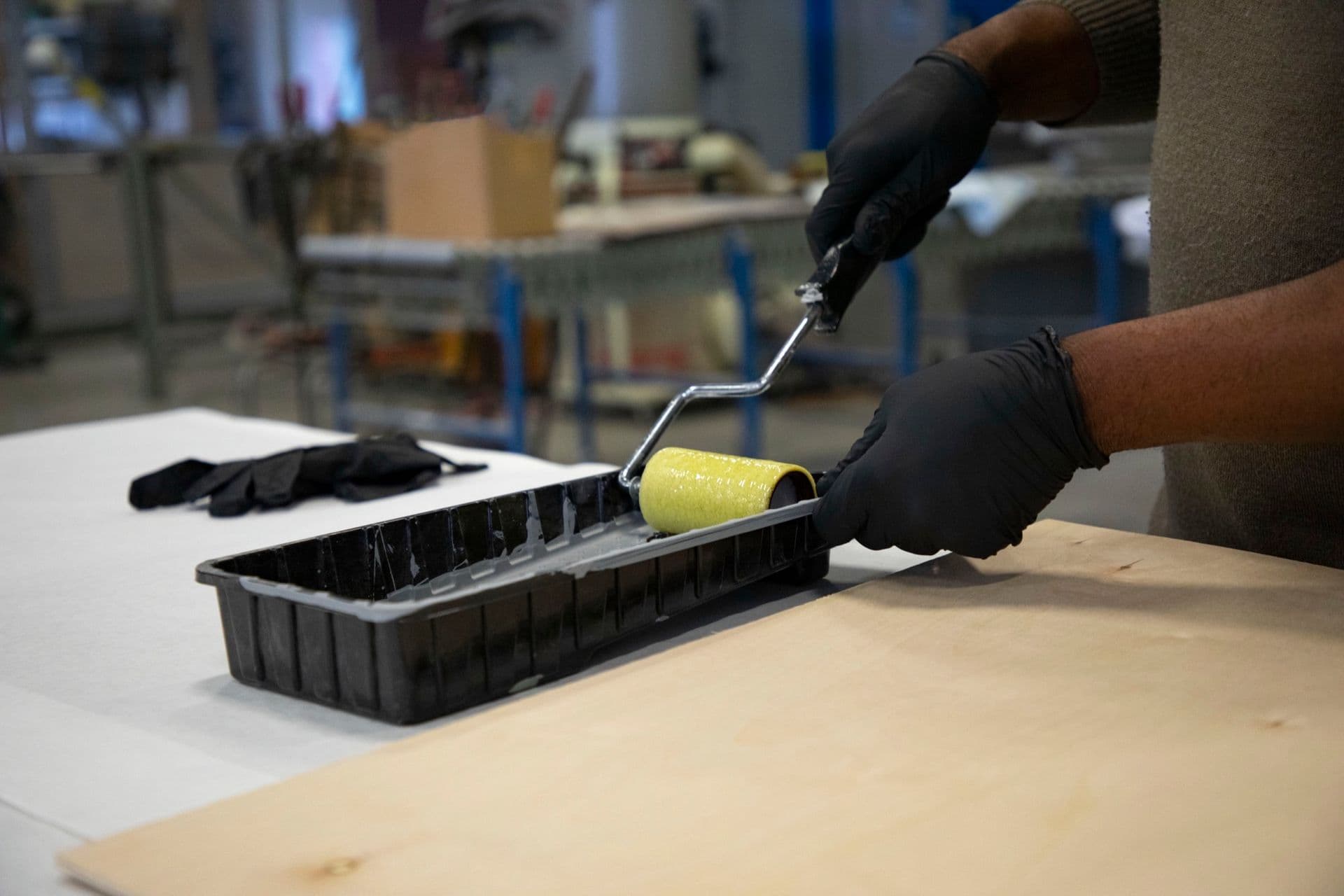
4. Apply an epoxy barrier coat
Several coats of epoxy are built up to form a water-resistant barrier. Systems such as WEST SYSTEM epoxy are designed for this, typically applied in multiple coats with a barrier-coat additive to reach the thickness the manufacturer specifies.
5. Primer and antifouling
Finally, the hull is primed and antifouled so it’s ready to go back in the water.
Can Osmosis Be Prevented?
You can’t make a hull completely waterproof, but you can greatly reduce the risk:
- Lift the boat out periodically so the hull can dry.
- Repair chips and damage to the gelcoat promptly.
- Avoid aggressive sanding that thins the gelcoat when preparing for antifouling.
- Apply an epoxy barrier coat as a preventive measure, especially on a new or newly stripped hull.
- Have moisture readings taken during routine haul-outs, so changes are spotted early.
Questions We’re Often Asked
Is osmosis dangerous? In most cases it’s a slow, progressive problem rather than an immediate safety risk. Left untreated for many years, however, it can weaken the laminate and reduce the boat’s value.
Should I buy a boat with osmosis? It depends on how severe it is and whether it’s been treated properly. A survey with moisture readings will tell you what you’re dealing with – and what a treatment might involve.
How long does treatment take? Most of the time is spent drying the hull, so the boat can be out of the water for some weeks. We’ll give you a realistic timeline after the inspection.
Get a Hull Check From MMR
If you’ve spotted blisters, or you’re buying a boat and want peace of mind, an inspection is the only way to know for sure. We’ll tell you honestly whether it’s osmosis, a paint problem, or nothing to worry about – and what, if anything, needs doing. See our epoxy & fibreglass repairs in Malta.
Book a hull check or message us on WhatsApp.